
Walkways and Front Steps for Older Homes in Hudson, MA: A Planning Guide
· By Sidney Mota Machado
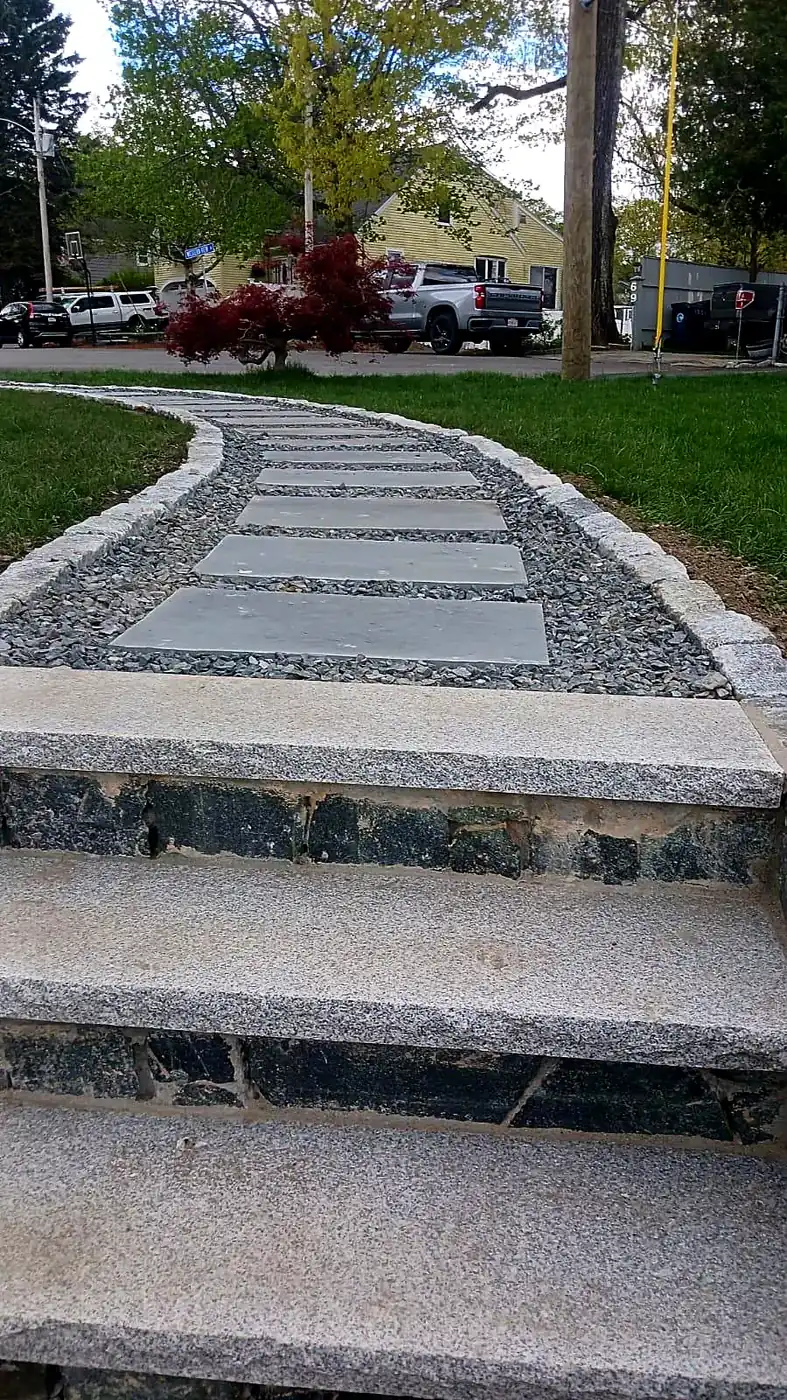
Hudson is a town with a lot of history in its housing. The Assabet River runs right through the middle of it, and the old shoe factories that once lined the river shaped the neighborhoods around downtown. Today Main Street is busy again with shops and restaurants, and many of the homes on the side streets nearby are older houses with narrow lots, tight setbacks and front steps that have shifted with decades of New England winters.
If you own one of those homes, the walkway and front steps are often the first thing that needs attention. This guide covers how to plan a new walkway or set of steps for an older Hudson home: which materials fit the house, why the base matters more than the stone, how to deal with drainage at the entry, and when to schedule the work.
Common walkway and step problems on older Hudson homes
The problems we see on older homes tend to repeat. Concrete or brick steps that have cracked and pulled away from the house. A walkway that heaves every winter and leaves a trip edge in spring. Steps with uneven risers, so one is taller than the others and people stumble. Water that pools at the bottom step because the walkway was laid flat or slopes toward the foundation.
Most of this comes down to what is underneath. Many older walkways were laid on a thin layer of sand or directly on soil, with no compacted gravel base. Frost gets under them, the ground expands, and the stone moves. Rebuilding on a proper base is what makes the new walkway stay flat.
Narrow lots near downtown add another challenge: limited space for equipment and materials, and neighbors close by. Planning access and keeping the site tidy matters as much as the stonework.
Choosing materials that suit the house
For older homes, the walkway should look like it belongs. Natural bluestone is a classic New England choice, either as cut slabs with tight joints or as irregular pieces with pea stone or polymeric joints. It looks right in front of a colonial or a Victorian era house and ages well.
Concrete pavers are the practical option. They come in many shapes and colors, including tumbled styles that look older than they are, and individual units can be lifted and reset if anything ever shifts. Granite cobblestone works beautifully as a border, an apron where the walkway meets the driveway, or a full surface for a more traditional look.
For steps, solid bluestone or granite treads over a block or stone riser are durable and easy to keep level. Fieldstone or stone veneer on the risers can tie the steps into an existing stone foundation or wall. The right mix depends on the house, the budget and how much traffic the entry gets.
Base prep and frost: the part you do not see
In Massachusetts, frost is the main enemy of any walkway. A durable walkway sits on several inches of compacted crushed stone (more under steps and in wet spots), with a thin setting bed on top and edge restraint along the sides so the surface cannot spread.
Steps need even more care. They carry concentrated weight and sit at the spot where roof water and foot traffic meet. A solid foundation under the steps, whether a compacted stone base, block or a poured footing depending on the design, keeps them from tipping away from the house over time.
Equally important is consistent riser height and tread depth. Uneven steps are a safety issue, especially for older visitors. Getting them right is part of the planning, not a detail left for the end.
Drainage at the front entry
Older homes often have gutters that drain right onto the front walk, or a walkway that slopes back toward the house. Every new walkway should be pitched slightly so water runs off to the side, away from the foundation.
When roof water is the problem, connecting the downspout to an underground pipe and a dry well or a safe outlet keeps the walkway dry and reduces ice in winter. Hudson's location along the Assabet River means some lower lots hold more water, so it is worth looking at drainage before the new stone goes down.
Fixing drainage at the same time as the walkway costs much less than coming back later and lifting finished stone.
Timing and permits
Walkway and step projects can usually run from early spring until the ground freezes. Spring is popular because winter damage is fresh and people want the entry fixed before summer. Fall is a great time too, since the work is done before the first frost tests it.
A simple walkway replacement often does not need a building permit, but steps attached to the house, changes to the entry or work in a historic area can be different. Some streets near downtown may have extra review, and properties near the Assabet River or Fort Meadow Reservoir may fall under the Hudson Conservation Commission. Always check with the Hudson building department for your address, and call Dig Safe (811) before any excavation.
Working with Machado Landscaping in Hudson
Hudson borders Marlborough, where we are based, so it is part of our everyday service area. We build paver walkways, bluestone walkways and stone steps for homeowners, and we also work with builders and general contractors on renovations and new homes. We have been in construction since 1998 and keep every job site clean and organized, which matters on a tight lot with neighbors next door.
Call or text (508) 663-9401, Monday to Saturday from 8 AM to 6 PM. We reply within 1 hour during business hours, and the estimate is free with no visit fee.
Frequently asked questions
- How much does a new walkway cost in Hudson, MA?
- It depends on length, material, base prep and whether old concrete or brick has to be removed. As a rough market guide, paver walkways in Massachusetts often run from the mid teens to the high twenties per square foot installed, and natural bluestone usually costs more. A free estimate gives you a real number for your walkway.
- Should I choose pavers or bluestone for an older home?
- Both can work. Bluestone has a classic New England look that suits colonial and Victorian homes. Pavers are very durable, come in tumbled styles that look aged, and are easy to repair. Many older homes look best with a mix, such as a bluestone walkway with a granite cobblestone border.
- Why do my front steps keep pulling away from the house?
- Usually the base under the steps was not deep or compacted enough, and frost and water have moved it over the years. Roof water draining onto the steps makes it worse. The lasting fix is to rebuild on a proper base and redirect the water.
- Do I need a permit to replace front steps in Hudson?
- It depends on the scope and your property. Simple replacements often do not, but steps attached to the house, changes to the entry and work near wetlands may need review. Check with the Hudson building department and, if you are near water, the Conservation Commission.
Related services
Serving
Found this helpful? Make us a preferred source on Google.
Ready for an exact price?
Get a free, no-pressure in-home estimate. Real numbers for your home, not a phone guess.