
Stone Veneer and Front Walkways in Natick, MA: Upgrading Curb Appeal
· By Sidney Mota Machado
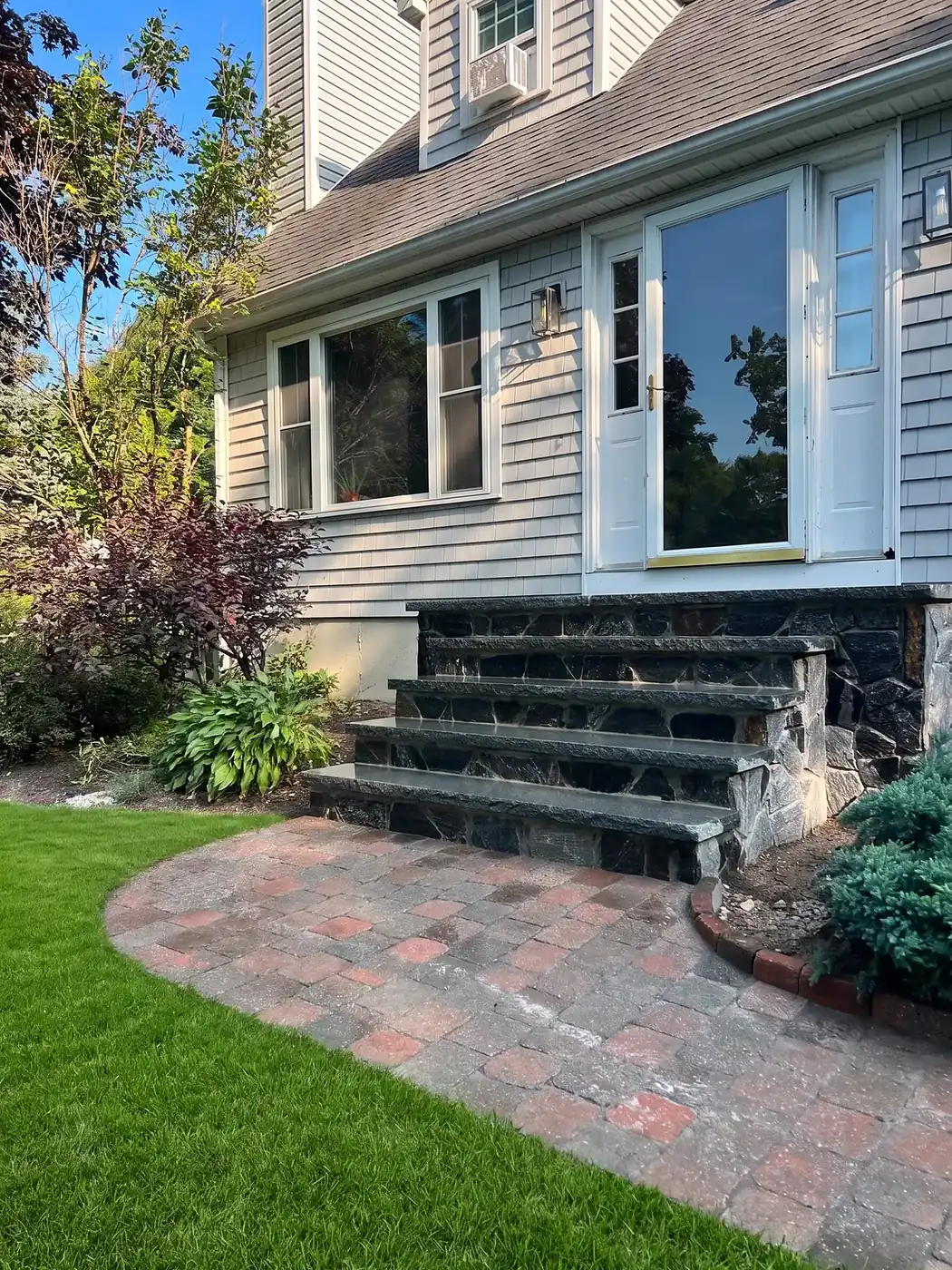
Natick has a wide mix of homes, from older houses around Natick Center and the historic village of South Natick to neighborhoods of capes, ranches and colonials along Route 9, Route 135 and the streets near Lake Cochituate. Many of those homes have solid bones but a tired front: a bare concrete foundation showing above the grade, plain entry steps and a cracked walkway.
Stone veneer and a new front walkway are two of the most effective ways to change how a house looks from the street. This guide explains how veneer works, where it makes sense, how to choose between natural and manufactured stone, and how to plan a walkway that ties it together. Machado Landscaping & Construction Inc is based in Marlborough, MA and does masonry work in Natick and across MetroWest.
What stone veneer is (and is not)
Stone veneer is a thin layer of stone applied to an existing wall, such as a concrete foundation, a block wall, a chimney chase or the face of entry steps. It gives the look of a full stone wall without the weight and cost of building one from solid stone.
There are two main types. Natural thin veneer is real stone, such as fieldstone or granite, cut thin enough to apply to a wall. Manufactured veneer is a cast product made to look like stone. Natural stone usually costs more and has more color variation; manufactured stone is lighter and more uniform. Both can look excellent when the installation is done well.
Veneer is not structural. It does not fix a cracked foundation or a failing wall. If the wall behind has a problem, that has to be solved first, or the veneer will crack along with it.
Where veneer works on a Natick home
The most common use is the exposed foundation. Many houses show a band of gray concrete between the grade and the siding. Covering it with stone makes the house look anchored and finished, and it pairs well with a planting bed in front.
Entry steps and the front stoop are another strong spot. Facing concrete steps with stone risers and setting bluestone treads on top can make a modest entry look custom. Veneer also works on columns, a chimney chase, a low wall around a patio or the face of a retaining wall.
On older homes near Natick Center or in South Natick, matching the stone to the age and style of the house matters. A fieldstone look often suits older New England homes, while a cleaner ledgestone or cut stone can fit a newer build.
Installation details that decide how veneer lasts
Veneer fails when water gets behind it and freezes. On concrete or block, the surface has to be clean and prepared so the mortar bonds. On framed walls, a proper water resistive barrier, lath and a scratch coat are part of the system. The bottom of the veneer needs to sit at the right height above grade and finished surfaces so it is not sitting in wet soil or snow.
Joints, caps and transitions matter too. The top edge of a veneered wall or step should be capped so water sheds off instead of soaking in. Where veneer meets siding or windows, flashing and sealing details keep water out.
If you are comparing quotes, ask how the wall will be prepared, what goes behind the stone and how the top and bottom edges will be finished.
Planning the front walkway
A walkway is the line that connects the driveway or the sidewalk to the front door, and it is the first thing guests touch. In Natick, many front walks are original concrete that has cracked and heaved. Replacing it with pavers, bluestone or a mix gives a cleaner look and a safer surface.
Options include a paver walkway with a contrasting border, bluestone slabs set with stone dust or pea stone joints and a granite cobblestone edge, or a full bluestone walk on a compacted base. Width of around 4 feet feels generous, and a gentle curve often softens a wide front lawn.
The walkway and the veneer should be designed together. When the stone on the foundation, the steps and the walk share colors and textures, the whole front reads as one project instead of three separate upgrades.
Cost factors to expect
Stone veneer pricing usually depends on the type of stone, the square footage, how much prep the wall needs and how many corners, caps and edges are involved. Installed veneer in New England often ranges from roughly the low $20s to $50 or more per square foot depending on the stone and the details. Natural stone typically costs more than manufactured.
Walkway cost depends on length, material, base depth and whether the old concrete has to be broken out and removed. These figures are only typical market ranges. Your estimate depends on your house and your choices, and Machado Landscaping provides free estimates with no visit fee.
When to schedule
Mortar work needs temperatures above freezing to cure, so veneer and walkway projects in MetroWest are usually built from spring into late fall. Booking in late winter for spring work or in summer for a fall finish gives you more flexibility.
If you are planning to sell, a refreshed foundation and front walk can be finished well ahead of listing photos. If you are staying, doing it before winter means safe footing all season.
Frequently asked questions
- Can stone veneer go directly on a concrete foundation?
- Often yes, as long as the concrete is sound, clean and properly prepared. Painted or sealed surfaces may need extra prep or lath so the mortar bonds. A crack or water problem in the foundation should be fixed first.
- Is natural stone veneer better than manufactured stone?
- Neither is better for every house. Natural stone has more variation and a very authentic look, and it usually costs more. Manufactured stone is lighter and more consistent. The right choice depends on the style of the home and the budget.
- Do I need a permit for stone veneer or a new walkway in Natick?
- Requirements depend on the scope of work and the property. Some exterior work needs a permit and some does not, and properties in historic areas can have extra review. Check with the Town of Natick before work begins.
- How do I keep a stone veneer wall looking good?
- Keep water directed away from it, avoid piling snow against it all winter, clear gutters that overflow onto it and check the caps and joints every few years. Small mortar repairs are much easier than fixing water damage behind the stone.
Related services
Serving
Found this helpful? Make us a preferred source on Google.
Ready for an exact price?
Get a free, no-pressure in-home estimate. Real numbers for your home, not a phone guess.