Retaining Wall Cost and Which Type Fits Your Yard
· By Sidney Mota Machado
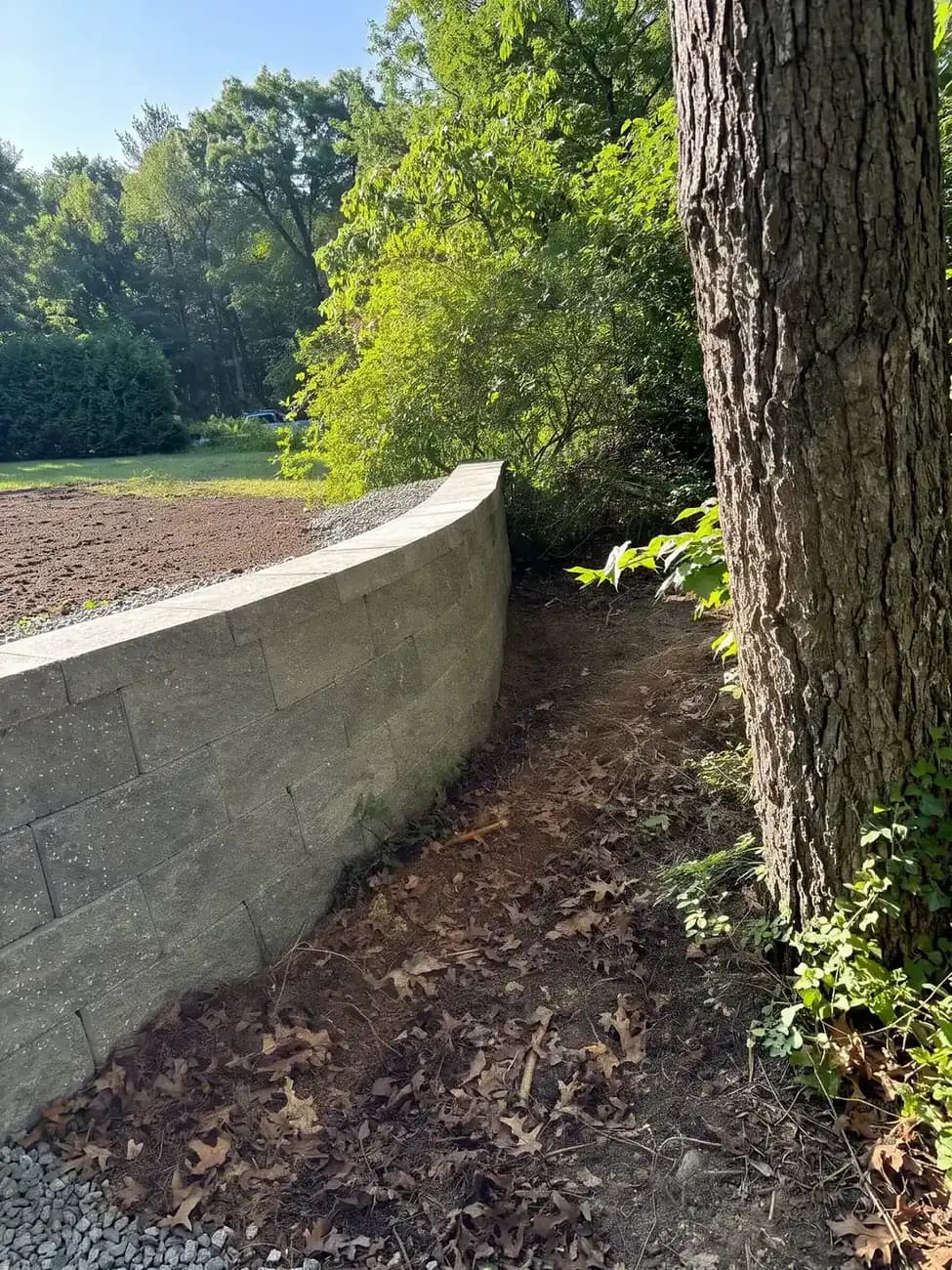
A retaining wall turns a slope you cannot use into flat ground you can: a level lawn, a patio, a garden bed or a wider driveway. It also stops soil from washing down onto walkways and foundations. Because it holds back the weight of the earth behind it, a retaining wall is a structure, not just a decoration, and that is the key to understanding retaining wall cost.
This guide compares the common wall types, gives typical market price ranges, explains the drainage and base work that make a wall last, and covers when height starts to require a permit and an engineer. It is written for New England yards, where rocky soil, heavy rain and frost all put a wall to the test.
How is retaining wall cost usually measured?
Most contractors price retaining walls by the square foot of wall face (length times height), installed. A wall 40 feet long and 3 feet tall is 120 square feet of face. Some quote by the linear foot for a given height. Either way, height matters more than length, because a taller wall holds back far more pressure and needs a deeper base, more drainage and often reinforcement.
Ask any contractor whether the price includes excavation, base, drainage stone, pipe, backfill and removal of excess soil. Those items are a large share of the cost.
Which type of retaining wall fits your yard and budget?
Segmental concrete block is the most common residential choice. The blocks interlock, come in many colors and textures, and can build straight or curved walls. Typical market ranges often fall around $25 to $50 per square foot of face installed. Taller block walls use geogrid, a reinforcing mesh laid into the soil behind the wall.
Natural stone walls, using fieldstone or cut granite, fit the New England landscape and older homes beautifully. They usually cost more, often around $40 to $80 or more per square foot, because each stone is fitted by hand. Dry stacked stone walls work for lower heights; taller ones need careful engineering.
Poured concrete is strong and suits tall or tight spaces, often in a range of about $30 to $60 per square foot, and can be faced with stone veneer for a natural look. Timber walls are the cheapest up front but have the shortest life in our wet climate and are less common for new work.
Why is drainage the most important part of the wall?
Most retaining walls do not fail from the weight of soil alone. They fail from water. After heavy rain or snowmelt, soil behind the wall gets saturated and heavy, and in winter that water freezes and expands. Without a way out, that pressure pushes walls forward, bulges them and cracks them.
A well built wall has a zone of clean crushed stone directly behind it, a perforated drain pipe at the base that carries water to daylight or to a dry well, and filter fabric to keep soil from clogging the stone. On blocks, the lowest course sits below grade on a compacted gravel base. None of this shows when the job is done, which is why it is where low quotes cut corners.
When does a retaining wall need a permit or an engineer?
Requirements vary by town. Many building departments require a permit and an engineered design once a wall reaches roughly 4 feet in height (often measured from the bottom of the footing), or when the wall supports a driveway, a structure or a steep slope above it. Some towns set different thresholds. Work near wetlands or water in Massachusetts can also need conservation commission review.
A practical tip: if you need a lot of height, two shorter terraced walls with a planting bed between them often avoid the need for one tall engineered wall and look softer in the landscape. Check with your local building department before you finalize the design.
What site factors change a retaining wall quote?
Excavation is the biggest variable. Rocky soil and ledge, common across Worcester County and MetroWest, slow digging and may need a hammer or extra machine time. Clay soil drains poorly and needs more drainage stone. Access matters too: if equipment cannot reach the wall location, materials move by hand.
Curves and steps cost more than a straight run. Stairs built into the wall, caps, corners and lighting add labor and material. Removing an old failing wall, including rotted timbers or tumbled stone, is usually a separate line item, and so is hauling excess soil.
What are the signs an existing retaining wall is failing?
Watch for leaning or bulging sections, cracks that widen over time, blocks or stones that have shifted out of line, soil washing out at the base, and water pooling behind or on top of the wall after storms. Rotting timber walls usually show soft wood and gaps.
A small lean caught early can sometimes be corrected by rebuilding a section with proper drainage. A wall that is moving every season usually needs to be taken down and rebuilt. Either way, the sooner it is looked at, the less soil and landscaping you lose.
How do you plan a retaining wall project and get a fair price?
Measure the length and estimate the height you need, note where water flows across the slope during rain, and think about what the wall will support: a lawn, a patio, a driveway. Then ask contractors to quote the same scope, including base depth, drainage stone, pipe outlet, and whether geogrid is needed.
Machado Landscaping & Construction builds block and stone retaining walls, straight and curved, for homeowners and builders around Marlborough, Westborough and across Massachusetts, Rhode Island and New Hampshire. We look at your soil, slope and drainage and give you a free written estimate with no visit fee. Call (508) 663-9401 and we will reply within 1 hour during business hours, Monday to Saturday.
Frequently asked questions
- How much does a retaining wall cost per square foot?
- As typical market ranges, segmental block walls often run about $25 to $50 per square foot of face installed, natural stone around $40 to $80 or more, and poured concrete about $30 to $60. Height, drainage, excavation and access move the price.
- What is the cheapest type of retaining wall?
- Timber is usually the cheapest up front, but it has the shortest life in a wet climate. For long term value, segmental concrete block is often the most cost effective choice for residential walls.
- How tall can a retaining wall be without a permit?
- It depends on your town. Many building departments require a permit and engineering once a wall reaches around 4 feet, or when it supports a driveway or structure. Always confirm with your local building department.
- How long does a retaining wall last?
- A properly built block or stone wall with good drainage can last for decades. Timber walls usually have a much shorter life. Drainage behind the wall is the single biggest factor in how long any wall lasts.
- Do you charge for a retaining wall estimate?
- No. Machado Landscaping gives free estimates with no visit fee. Call (508) 663-9401.
Related services
Found this helpful? Make us a preferred source on Google.
Ready for an exact price?
Get a free, no-pressure in-home estimate. Real numbers for your home, not a phone guess.