
Polymeric Sand and Paver Sealing: Keeping Pavers Tight Through Winter
· By Sidney Mota Machado
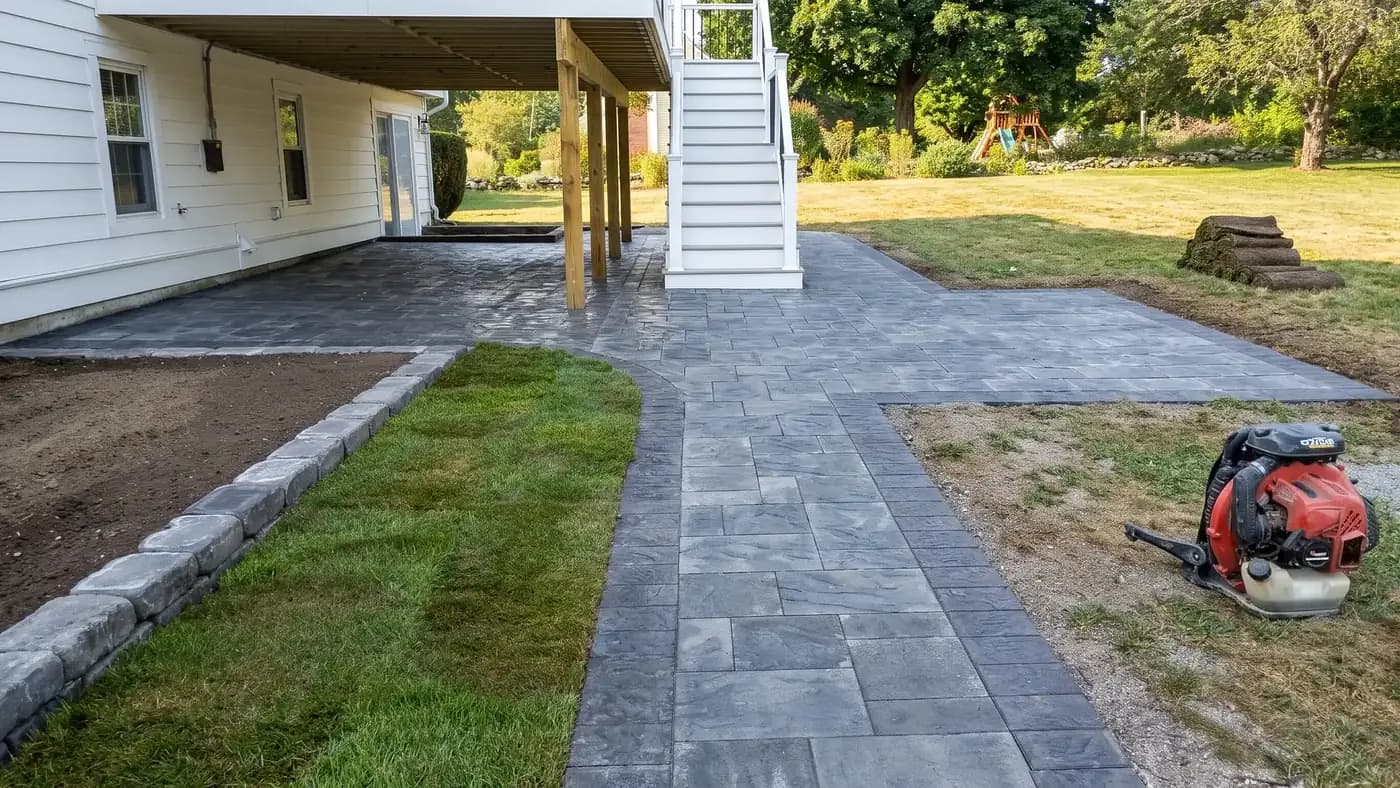
A paver patio, walkway or driveway is only as strong as the joints between the pavers. When the sand in those joints washes out, weeds move in, ants dig tunnels, water gets under the surface and individual pavers start to rock or sink. Through a New England winter, with rain, snow melt and repeated freezing, loose joints are where small problems turn into a rebuild.
Polymeric sand and paver sealing are the two main ways to keep a paver surface tight and clean. This guide explains what each one does, how they are applied, what they typically cost, and how to deal with the white haze called efflorescence that often shows up on new pavers.
What polymeric sand is
Polymeric sand is fine sand blended with polymer binders. It is swept dry into the joints between pavers, compacted, and then misted with water. The water activates the binders, and as the sand dries it hardens into a firm but flexible joint that resists washout, weed growth and insect activity much better than plain sand.
The flexibility is important. Pavers are designed to move slightly as the ground freezes and thaws, and a rigid joint like mortar would crack. Polymeric sand holds the pavers together while still allowing that small movement, which is why it is the standard choice for interlocking paver installations.
How polymeric sand is applied correctly
The surface has to be completely dry before the sand goes down, and rain should not be expected for at least a day. Sand is swept into the joints, the surface is run over with a plate compactor (with a protective pad) to settle the sand deep into the joints, and more sand is added until the joints are filled to just below the top of the paver, usually about an eighth of an inch.
The most important step is removing every grain of sand from the paver surfaces before watering, using a broom and then a leaf blower. Sand left on top will harden into a hazy film that is hard to remove. Watering is done in light passes, enough to activate the binder through the full depth of the joint without flooding the sand out. Skipping steps here is the reason most polymeric sand jobs fail.
Why joints fail in winter
Water is the enemy of every paver surface. When joints are open, water runs through them into the bedding sand and base. When it freezes it expands, and repeated freeze and thaw cycles can lift pavers, wash out the bedding layer and create low spots. Plows, snowblowers and shovels catch the edges of raised pavers and make things worse.
Rock salt and other deicers add another layer of stress, especially on older or softer surfaces. Keeping the joints full, the edges restrained and the surface draining properly is what keeps pavers flat through the winter. Before the cold arrives, look for low or missing joint sand, rocking pavers and loose edging along patios, walkways and driveways.
What paver sealing does
A paver sealer is a liquid coating applied over the whole surface after the joints are filled. Depending on the product, it can enhance color for a wet look, leave a natural matte finish, reduce staining from oil, food and leaves, help resist moisture absorption and further stabilize the joint sand. Sealing does not replace polymeric sand; it protects the pavers and the joints together.
Sealers wear over time from foot traffic, tires, sun and weather, so resealing is usually needed every few years. Driveways typically need it more often than patios. A paver surface should be thoroughly cleaned and fully dry before sealing, and new pavers are often given time for efflorescence to come out before they are sealed.
Efflorescence on pavers
Efflorescence is the white, chalky haze that appears on concrete pavers, especially in the first year. It comes from natural salts in the concrete that move to the surface with moisture and are left behind when the water evaporates. It is not a defect and does not weaken the pavers, but it can make a new patio look dull.
Efflorescence often fades on its own with time, rain and normal use. Where it persists, a cleaner made for removing efflorescence from concrete pavers can be used, followed by thorough rinsing. Sealing over efflorescence locks the haze in, so it should be dealt with first.
Typical cost of re-sanding and sealing pavers
As a rough market guide, professional cleaning and re-sanding with polymeric sand often runs about $1 to $3 per square foot, and cleaning, re-sanding and sealing together often runs about $2 to $4 or more per square foot. Small jobs usually have a minimum charge, and heavy staining, weeds that have taken over, or sunken areas that need pavers lifted and the base corrected will raise the price.
If many pavers have shifted or sunk, sand and sealer alone will not fix the problem. In that case the affected section is usually lifted, the base is regraded and compacted, and the pavers are reset before new joint sand goes in.
Keep your pavers tight with Machado Landscaping
Machado Landscaping builds and maintains paver patios, walkways and driveways for homeowners and builders, including re-sanding joints, resetting sunken areas and sealing. We work carefully around your home and leave the job site clean and organized. The estimate is free with no visit fee. Call (508) 663-9401 and we reply within 1 hour during business hours, Monday through Saturday.
Frequently asked questions
- How long does polymeric sand last?
- When installed correctly on a well built base, polymeric sand often lasts several years before joints need topping off or replacing. Heavy traffic, poor drainage and pressure washing can shorten its life.
- Can polymeric sand be applied in the fall?
- Yes, as long as the pavers are completely dry, no rain is expected for at least a day and temperatures stay above the minimum listed by the manufacturer. Late fall work should be planned before nights get too cold.
- Should I seal my pavers?
- Sealing is optional but helpful. It enhances color, resists stains, helps lock in joint sand and makes cleaning easier. Most sealed surfaces need resealing every few years, with driveways often needing it more often than patios.
- What is the white haze on my new pavers?
- It is usually efflorescence, natural salts from the concrete that rise to the surface with moisture. It does not harm the pavers, often fades on its own, and can be removed with an efflorescence cleaner before sealing.
- How much does it cost to re-sand and seal pavers?
- As a rough market guide, re-sanding with polymeric sand often runs about $1 to $3 per square foot, and cleaning, re-sanding and sealing together often runs about $2 to $4 or more per square foot. Condition and size of the surface set the final price.
Related services
Found this helpful? Make us a preferred source on Google.
Ready for an exact price?
Get a free, no-pressure in-home estimate. Real numbers for your home, not a phone guess.