Paver Driveway Cost in New England: What Drives the Price
· By Sidney Mota Machado
A paver driveway is one of the most visible upgrades you can make to a house. It frames the front of the home, handles heavy cars when it is built right, and can be repaired one section at a time instead of being torn out. It is also a significant investment, so it pays to understand paver driveway cost before you start collecting quotes.
Most of the price is not in the pavers you see. It is in the digging, the base underneath and the edges that hold everything in place. This guide explains typical market price ranges in New England, what pushes a quote up or down, and how pavers compare with asphalt and with mixed designs like a cobblestone apron.
How much does a paver driveway typically cost?
Paver driveways are usually priced per square foot, installed. In New England, typical market ranges often fall somewhere around $30 to $60 per square foot, and premium natural stone or complex patterns can go higher. For comparison, a new asphalt driveway often runs a fraction of that per foot.
A two car driveway can be 500 to 800 square feet or more. At those ranges, a full paver driveway commonly ends up in the mid to high five figures. That is why many homeowners look at partial options: a paver apron at the street, a paver border along an asphalt drive, or pavers only in the parking area near the house.
These numbers describe the market in general and are not a quote. Your price depends on your site, and the biggest variable is usually what is underneath.
Why does the base matter more than the pavers?
A driveway carries the weight of cars and trucks, and in our climate it also has to survive frost. A properly built paver driveway sits on a deep layer of compacted crushed stone, commonly in the range of 8 to 12 inches for vehicle traffic and sometimes more on soft or wet soil, with a thin bedding layer on top. Each layer is compacted in lifts so it does not settle later.
Getting there means excavating the old driveway and soil, hauling it away, bringing in and compacting new base, and grading so water runs off instead of sitting under the pavers. That work is invisible when the job is done, but it is what keeps pavers flat through years of freeze and thaw. A cheap quote that skimps on base depth is the most common reason paver driveways sink and rut.
What else changes the price of a paver driveway?
Removal of the existing surface is a real cost. Breaking out old concrete or thick asphalt and trucking it away takes equipment and disposal fees. Slope and drainage matter too: a steep driveway may need extra grading, a trench drain at the garage or a dry well to handle runoff.
The paver itself changes the price. Standard concrete pavers rated for vehicles are the most common. Thicker pavers, permeable systems that let water drain through, and natural granite cobblestone all cost more. Pattern adds labor: herringbone, which is often recommended for driveways because it resists shifting under turning tires, takes more cutting than a simple running bond. Curves, borders and inlays add cutting time as well.
Finally, edge restraint is required to keep pavers from spreading. Concrete curbs, buried edging or a granite cobblestone border all hold the field in place, and each has a different cost.
Pavers vs asphalt: which makes more sense for New England?
Asphalt is cheaper to install and quick to put down. It usually needs sealing every few years and eventually cracks and has to be resurfaced or replaced. Frost heave and plow damage are common in our winters.
Pavers cost much more up front, but individual units can be lifted and reset if a section settles or a utility line needs to be reached, and the joints let the surface flex a little with freeze and thaw instead of cracking. Many homeowners also value the look. Concrete pavers can be harmed by some deicing chemicals, so it is worth asking which products are safe for the paver you choose.
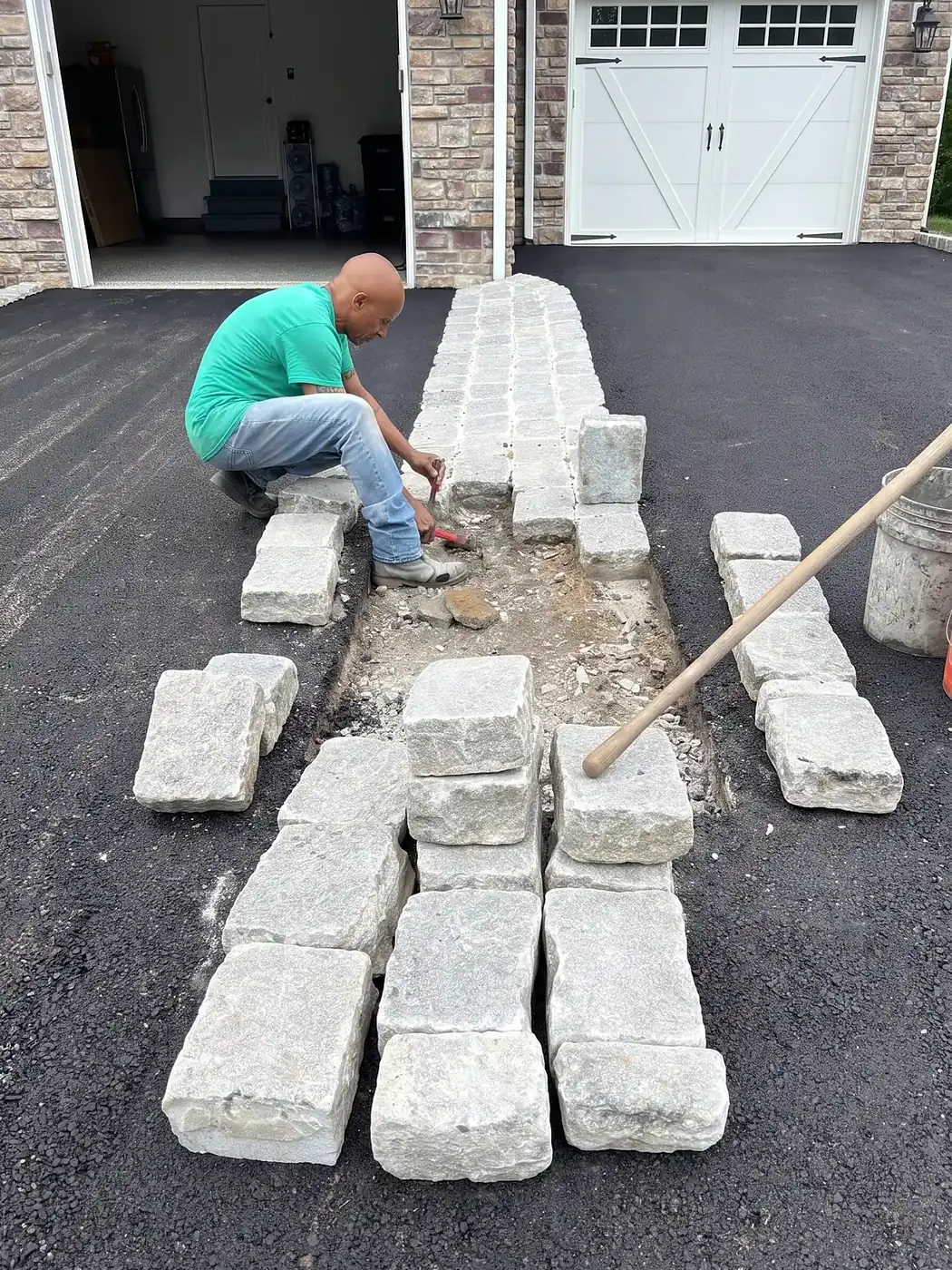
A popular middle ground is asphalt with a granite cobblestone apron or border. It adds a finished look at the street or garage for far less than a full paver drive, and it is a project we see a lot of in Marlborough and nearby towns.
Do you need a permit for a new driveway?
It depends on the town and the scope. Replacing a driveway in the same footprint often needs no building permit, but changing the curb cut, widening at the street or working in the public right of way commonly requires approval from the town's public works department. Projects near wetlands may need conservation commission review in Massachusetts. Always check with your local building or DPW office before work starts.
And before any excavation, call 811 so Dig Safe can mark utilities. Water, gas and electric services often run right under a driveway.
How can you plan a realistic paver driveway budget?
Start with the square footage and decide what you want: a full paver drive, a paver apron, or a border. Then ask each contractor to quote the same scope, including removal, base depth, paver type and thickness, pattern, edging and drainage. That makes quotes comparable.
Ask specifically how deep the base will be and how it will be compacted. That single question tells you a lot about the quality of a quote.
Machado Landscaping & Construction builds paver driveways, aprons and cobblestone borders for homeowners and builders across Massachusetts, Rhode Island and New Hampshire. We look at your soil, grade and drainage, and give you a clear written estimate with no visit fee. Call (508) 663-9401 and we will reply within 1 hour during business hours, Monday to Saturday.
Frequently asked questions
- How much does a paver driveway cost per square foot?
- In New England, typical market ranges often fall around $30 to $60 per square foot installed, with premium stone and complex patterns higher. Excavation, base depth, removal of the old surface and drainage are the main reasons quotes differ.
- How long does a paver driveway last?
- With a properly built base and good edge restraint, a paver driveway can last for decades. Individual pavers can be lifted and reset if an area settles, which is a major advantage over poured surfaces.
- Can you plow a paver driveway?
- Yes. Many owners use a plow or snowblower with a raised blade or a rubber edge to avoid catching paver edges. Ask about deicers, because some chemicals are harder on concrete pavers than others.
- Is a cobblestone apron worth it on an asphalt driveway?
- For many homes it is a good value. A granite cobblestone apron or border gives a finished look at the street or garage for a fraction of the cost of a full paver driveway.
- Do you charge for a driveway estimate?
- No. Machado Landscaping gives free estimates with no visit fee. Call (508) 663-9401.
Related services
Serving
Found this helpful? Make us a preferred source on Google.
Ready for an exact price?
Get a free, no-pressure in-home estimate. Real numbers for your home, not a phone guess.