
Planning a Patio or Stone Wall in Sudbury, MA: Soil, Permits and Timing
· By Sidney Mota Machado
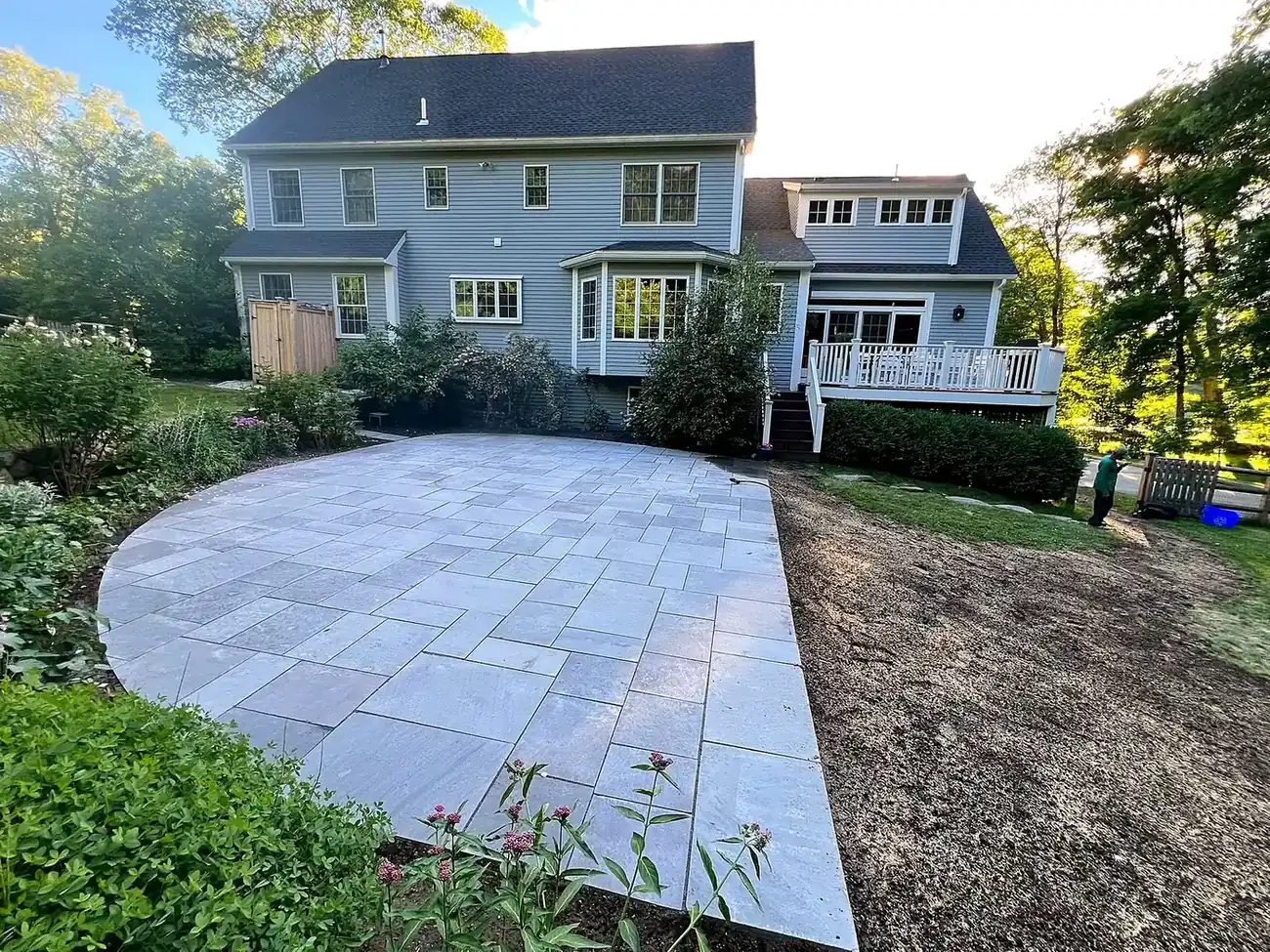
Sudbury has kept much of its old New England character. The town center along Hudson and Concord Roads, the King Philip Historic District in south Sudbury and the area around the Wayside Inn on the Old Boston Post Road all have the same feel: colonial homes, winding roads and old fieldstone walls built by the farmers who cleared the land centuries ago. Even in newer neighborhoods, lots tend to be large and wooded, and many properties still have a stone wall running along the back or side.
That makes Sudbury a natural place for stone walls and patios, but it also means a project here deserves some extra thought. This guide covers how to plan a patio or a stone wall in Sudbury: working with existing fieldstone walls, choosing materials on a large lot, the historic district and wetland questions to ask, and when to build.
Repairing, rebuilding and extending old fieldstone walls
Many Sudbury homeowners do not need a new wall so much as a repaired one. Old farm walls were usually dry laid, stacked without mortar, and over a century or two frost, tree roots and fallen branches knock stones loose. Sections collapse, cap stones roll off and gaps open up.
A good repair works with the original wall instead of fighting it: pulling down the failed section, setting a firm base and relaying the stones with the same dry laid technique and the same look. When a wall needs to be extended, the goal is for the new section to blend with the old. Sourcing fieldstone that matches in size and color makes a big difference.
If the wall is along a road or property line in an older part of town, it can be worth checking whether it has historic or scenic value before major changes. More on that below.
Dry laid or mortared: which wall fits your property
Dry laid stone walls flex with frost and drain naturally through the gaps, which is why so many old ones are still standing. They suit the rural look of much of Sudbury and are the right choice for boundary walls and freestanding walls in the yard.
Mortared stone walls, or walls with a block core and natural stone veneer, give a cleaner, more formal look. They work well near the house, at an entry, as a seat wall around a patio or anywhere you want straight lines and a flat cap. They need a solid footing below the frost line or a well built base, because a rigid wall cracks if the ground moves under it.
On a large lot, many homes use both: dry laid fieldstone at the edges of the property and a mortared or veneered seat wall near the patio.
Sizing and placing a patio on a larger Sudbury lot
With more yard to work with, the temptation is to go big. A patio should be sized for how you actually use it: a dining area, a seating area, maybe a fire pit, with enough room to move around furniture. It helps to mark the outline with paint or a hose and live with it for a few days before deciding.
Bluestone is a natural fit for Sudbury homes, whether in cut patterns or irregular pieces, and it matches the color of many fieldstone walls. Concrete pavers offer more color and shape options and are easy to repair. Granite steps and cobblestone borders tie a patio to the house and the lawn.
Placement matters as much as size. Wooded lots bring shade, falling leaves and tree roots, so keeping the patio a reasonable distance from large trees protects both the stone and the trees. The patio should also slope slightly away from the house so water drains off, and on lower areas of the yard, a French drain or dry well may be needed to keep the base dry.
Historic districts, wetlands and permits
Sudbury has local historic districts, including the town center, the King Philip Historic District and the Wayside Inn area. If your property is inside one of them, exterior changes that can be seen from a public way may need review by the Sudbury Historic Districts Commission. A backyard patio often is not visible, but a wall along the road or work at the front of the house may be. Check with the town before starting.
Sudbury also has a lot of protected land and water, including the Sudbury River, brooks, ponds and wetlands. Under the Massachusetts Wetlands Protection Act, work within 100 feet of a wetland or 200 feet of most rivers and perennial streams can require a filing with the Sudbury Conservation Commission. Large wooded lots often have wetland areas that are not obvious at first glance.
Finally, a patio or a low freestanding wall usually does not need a building permit, but taller walls and retaining walls may. Always check with the Sudbury building department for your address and call Dig Safe (811) before any digging.
Soil and timing in Sudbury
Soil in Sudbury varies a lot from one lot to the next, from sandy, well drained ground to dense, wet soil in lower areas near brooks and wetlands. That affects how deep the base needs to be and whether a patio needs extra drainage. A few test holes during the estimate tell us what we are working with.
Patios and stone walls can be built from spring until the ground freezes. Spring projects are ready for summer, and fall is a great time because the weather is cooler, the ground is dry and the work is finished before winter. If a Conservation Commission or Historic Districts review is involved, start the conversation early so the paperwork does not push your project into the next season.
Planning your Sudbury project with us
Machado Landscaping & Construction builds patios, stone walls, steps and stone veneer for homeowners and for builders and general contractors in Sudbury and the surrounding towns. We have been in construction since 1998, and we keep the job site clean and organized, which matters on a property where the lawn and old walls are part of the charm.
Call or text (508) 663-9401, Monday to Saturday from 8 AM to 6 PM. We reply within 1 hour during business hours, and the estimate is free with no visit fee.
Frequently asked questions
- How much does a bluestone patio cost in Sudbury, MA?
- It depends on size, pattern, base prep, access and extras like steps or a seat wall. As a rough market guide, bluestone patios in Massachusetts often fall somewhere in the twenties to forties per square foot installed, with pavers often a bit less. A free on-site estimate gives you an accurate price.
- Can an old fieldstone wall be repaired instead of replaced?
- Usually yes. Most old dry laid walls can be taken down in the failed sections and relaid on a firm base using the original stones. When stones are missing, matching fieldstone can be added so the repair blends in.
- Do I need approval to build a wall in a Sudbury historic district?
- If the property is inside one of Sudbury's local historic districts and the work is visible from a public way, it may need review by the Historic Districts Commission. Check with the town before starting any wall or front yard work.
- What is the best time to build a patio in Sudbury?
- Spring through fall, while the ground is not frozen. Fall is often ideal because the ground is dry and the patio is ready for the following spring. If a conservation or historic review is needed, start planning a few months ahead.
Related services
Serving
Found this helpful? Make us a preferred source on Google.
Ready for an exact price?
Get a free, no-pressure in-home estimate. Real numbers for your home, not a phone guess.