
Planning a Patio or Paver Walkway in Shrewsbury, MA: A Homeowner's Guide
· By Sidney Mota Machado
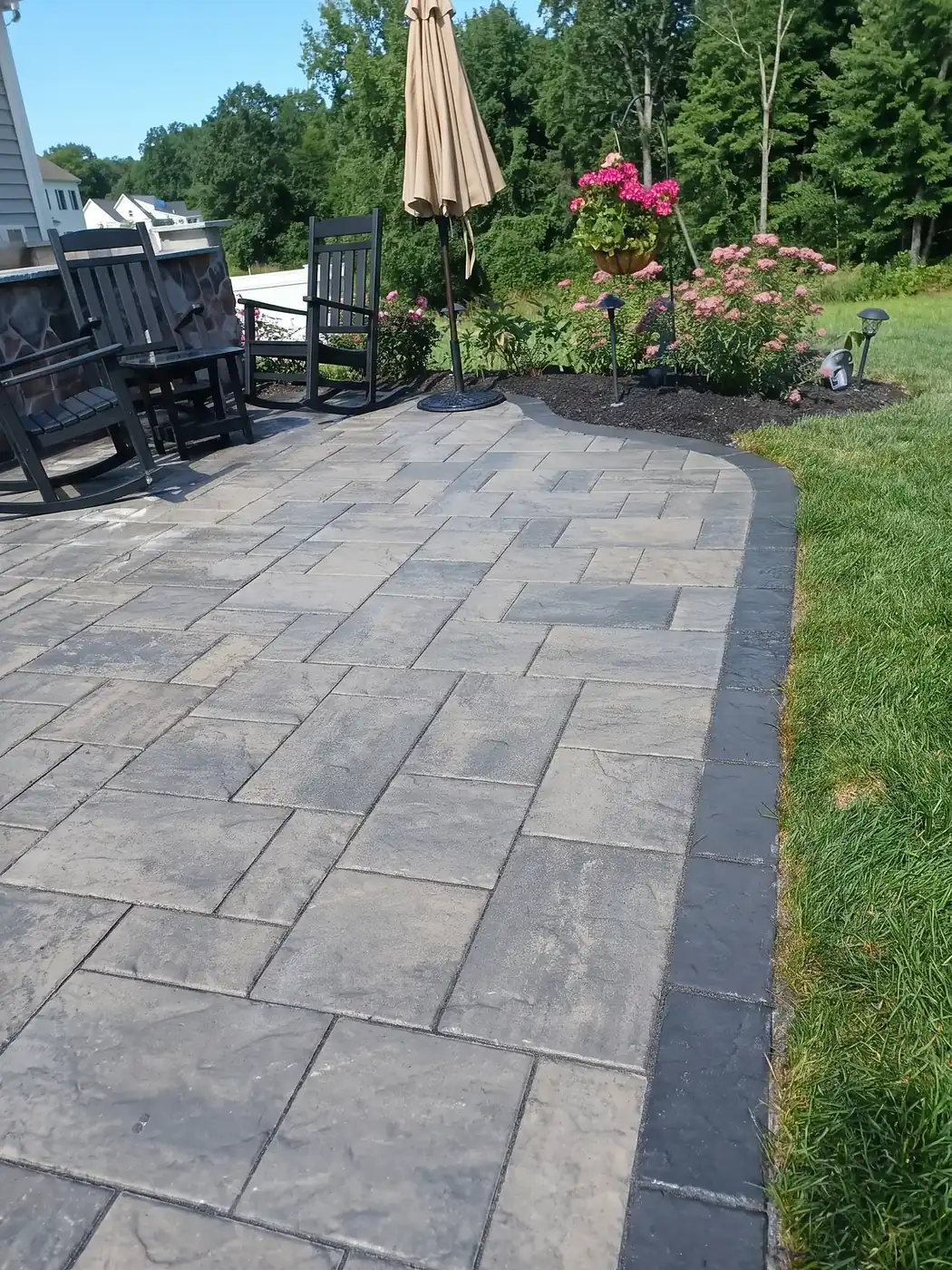
Shrewsbury is a town of established residential streets. Many homes sit on the eastern side of Lake Quinsigamond, the long lake that separates Shrewsbury from Worcester, and Route 9 runs right through the middle of town over the Burns Bridge. Plenty of those houses were built decades ago, which means the original concrete walk has cracked, the back steps have shifted, and the yard is ready for a real outdoor space.
This guide walks through how to plan pavers in Shrewsbury the right way: how big the patio should be, why the base matters more than the stone on top, how to handle water on lots that slope toward the lake or a wetland edge, and what changes the price of a patio or walkway. Machado Landscaping & Construction Inc is based in nearby Marlborough and builds patios and walkways across Central Massachusetts and MetroWest.
Start with how you will actually use the space
The most common mistake we see is a patio that is too small. A round table with four chairs needs roughly a 12 by 12 foot area once you leave room to pull chairs out and walk around. Add a grill station and a couple of lounge chairs and you are often looking at 300 to 400 square feet. Sketch the furniture you own, or plan to buy, before you settle on a shape.
Think about the path too. In a typical Shrewsbury colonial or split level, the back door opens to a deck or a short set of steps. A patio set at the bottom of those steps, sometimes under the deck itself, keeps traffic flowing and gives you a shaded area in summer. A side walkway that links the driveway to the backyard saves people from cutting across the lawn and wearing a dirt line into it.
For the front of the house, the walkway is mostly about the first impression and safe footing. A gentle curve usually looks better than a straight line on a wide lot, but a straight walk can suit a narrow lot or a formal entry. Width matters: around 4 feet lets two people walk side by side, while 3 feet feels tight.
The base is the part that keeps pavers flat
New England winters are hard on hardscape. Water gets into the ground, freezes, expands and lifts anything that sits on a weak base. That is why a paver patio that looked perfect in June can have humps and sunken spots by the second spring when the base was skipped or rushed.
A properly built patio starts with excavation below the topsoil, then a compacted layer of crushed gravel base installed in lifts, a thin bedding layer, the pavers, edge restraint and joint sand. Base depth depends on the soil and on what the surface will carry. Walkways and patios usually need less than a driveway, but on wet or clay soils a deeper base is often the cheaper choice over the life of the patio.
Ask any contractor you talk to how deep they dig, how they compact and what holds the edges. Clear answers to those three questions tell you more about the finished job than any picture of the stone.
Water near the lake and on sloped lots
Many Shrewsbury lots slope, either toward the street, toward the lake or toward a low corner of the backyard. A patio is a large hard surface, so the water that used to soak into the lawn now has to go somewhere. A patio should be pitched slightly away from the house, and the runoff should land where it will not pond against the foundation or wash out a neighbor's yard.
When a yard already stays soggy after a storm, it often makes sense to solve the drainage at the same time as the patio. Options include a french drain along the low edge, a dry well to collect roof and patio runoff, or regrading part of the yard. Doing it during the patio job costs less than tearing up new pavers later.
Properties close to the shoreline or to wetlands can fall under local conservation rules for work near resource areas. If your lot is near water, check with the Town of Shrewsbury before you commit to a design. Requirements vary by property, and the town is the only reliable source for what applies to yours.
Bluestone or concrete pavers?
Bluestone is a natural stone with a classic New England look. It suits older homes and colonials especially well, and it can be laid as rectangular cut pieces or as irregular flagstone. It can get warm in full summer sun and its price tends to sit above standard concrete pavers.
Concrete pavers come in many sizes, colors and textures, and they are built to interlock. They are a strong choice for a large patio or a walkway that connects to a paver driveway, and individual pieces can be lifted and reset if a section ever settles.
A mix often works best: a paver field with a bluestone or granite cobblestone border, or bluestone steps landing on a paver patio. The right answer depends on the style of your house, your budget and how much maintenance you want.
What changes the cost of a Shrewsbury patio
Prices for paver patios in Massachusetts often range widely, from the low teens to well above $30 per square foot installed, depending on the material, the access to the backyard, how much digging and base the soil needs, and extras like steps, seat walls or lighting. Natural stone such as bluestone typically lands at the higher end.
Access is a big factor people forget. A backyard reachable through a wide side gate is much faster to build than one where every load of gravel goes by wheelbarrow around the house. Slopes that need a small retaining wall or steps also add cost, but they can turn an unusable hill into a level, usable space.
The only way to get a real number is to have someone walk the property. Machado Landscaping gives free estimates with no visit fee, and we reply within 1 hour during business hours, Monday to Saturday.
Timing your project
Hardscape is usually built from spring through late fall, once the ground has thawed and before it freezes again. Spring is the busiest time to book, so planning in late winter or in the fall for the following season gives you more choice of dates.
Fall is also a smart time for a walkway, because you go into winter with solid footing at the front door instead of a cracked slab that collects ice. If you also want plantings or mulch around the new patio, those can be finished in the same visit or added in spring.
Frequently asked questions
- Do I need a permit for a paver patio in Shrewsbury, MA?
- Many simple at-grade patios do not need a building permit, but rules change with the project and the property. Raised patios, retaining walls and work near wetlands or the lake can trigger reviews. Always confirm with the Town of Shrewsbury before work starts.
- How long does a paver walkway last in Massachusetts?
- A walkway built on a properly compacted base with good edge restraint can last for decades. Most problems come from a thin base, poor compaction or water that is not directed away, not from the pavers themselves.
- Is bluestone slippery in winter?
- Thermal finished bluestone has a textured surface that gives decent grip. Any stone can get icy, so using a paver safe ice melt and keeping the surface pitched so water does not pool helps the most.
- Can you build a patio under an existing deck?
- Yes. A paver patio under a deck is a common way to create a shaded, dry area. The design has to account for the deck posts and for water dripping between deck boards, so the base and pitch are planned around them.
Serving
Found this helpful? Make us a preferred source on Google.
Ready for an exact price?
Get a free, no-pressure in-home estimate. Real numbers for your home, not a phone guess.