How Much Mulch Do I Need (and When to Mulch in Massachusetts)
· By Sidney Mota Machado
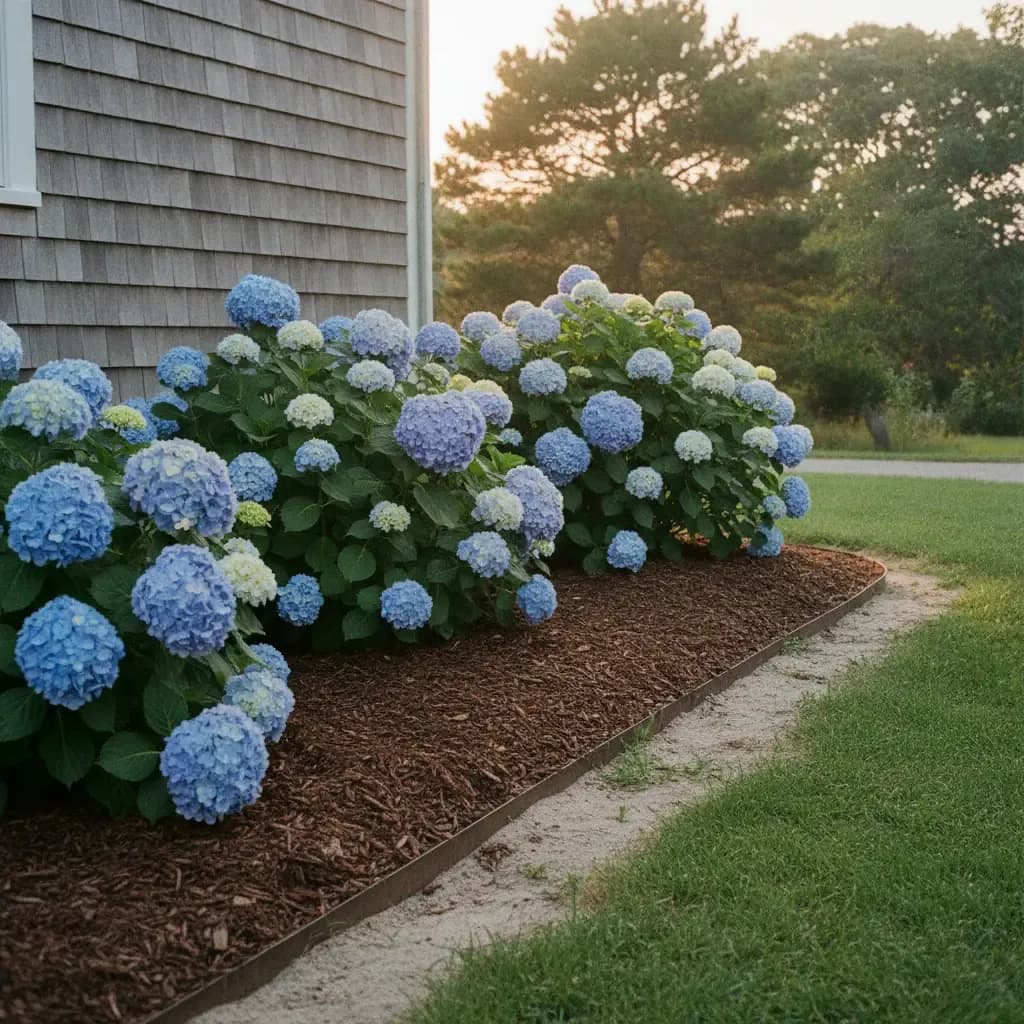
Mulch is one of the cheapest ways to make a yard look finished, and it does real work: it holds moisture in the soil, keeps weeds down, protects roots from temperature swings and breaks down into organic matter over time. The question most people get stuck on is simple: how much mulch do I need?
The answer comes from a quick measurement and one formula. This guide shows you how to calculate cubic yards for any bed, how deep to spread it, how bags compare with bulk, when to mulch in Massachusetts, and the common mistakes that hurt trees and shrubs.
What is the formula for how much mulch you need?
Bulk mulch is sold by the cubic yard. To find how many you need, measure the area of your beds in square feet (length times width for each bed, then add them up). Multiply the square footage by the depth you want in inches, then divide by 324. The result is the number of cubic yards.
Example: you have 400 square feet of beds and want 3 inches of mulch. 400 times 3 equals 1,200. Divide by 324 and you get about 3.7, so you would order 4 cubic yards. Round up rather than down, because beds are rarely perfect rectangles and the edges always take a little more than expected.
For odd shapes, break the bed into rough rectangles and triangles, or measure the length along the middle of a curved bed and multiply by its average width. Close is good enough.
How much area does one cubic yard of mulch cover?
One cubic yard covers about 324 square feet at 1 inch deep. That means roughly 162 square feet at 2 inches, about 108 square feet at 3 inches, and around 81 square feet at 4 inches.
If you buy bags, most bagged mulch comes in 2 cubic foot bags, and there are 27 cubic feet in a cubic yard. That is about 13 or 14 bags per yard. For a few small beds bags are convenient. For anything more than a couple of yards, bulk delivery or installed mulch is usually less work and less plastic.
How deep should mulch be?
For most shrub and perennial beds, 2 to 3 inches of mulch is the target. That is deep enough to block light from weed seeds and hold moisture, without smothering roots. If your beds already have an inch or two left from last year, a 1 inch top up is often all you need, so measure what is there before ordering.
More is not better. Mulch piled 5 or 6 inches deep can keep the soil too wet, block air from reaching roots and give rodents a place to nest. Around trees, keep mulch in a wide ring rather than a tall mound.
What is volcano mulching and why should you avoid it?
Volcano mulching is the cone of mulch piled up against the trunk of a tree, a sight you see in many commercial parking lots. It looks tidy, but it holds moisture against the bark, which can lead to rot, disease and insect problems, and it can encourage roots to grow up into the mulch and circle the trunk.
Tree care and extension programs consistently recommend the opposite: a flat ring of mulch 2 to 3 inches deep, extending out as far as is practical, with a few inches of bare space right around the base of the trunk. The same idea applies to shrubs: keep mulch off the stems.
When is the best time to mulch in Massachusetts?
Spring is the main mulching season here. The best window is usually from mid to late April into May, after the soil has thawed, drained and started to warm. Mulching too early on cold, wet soil can slow the warm up that perennials need. It also helps to do your spring cleanup, edge the beds and pull early weeds first, so the mulch goes down on a clean surface.
Fall is the second window. A light layer applied after the soil has cooled but before the ground freezes, often in October or November, helps insulate roots through winter and reduces the frost heave that can push newly planted perennials out of the ground. In MetroWest and Worcester County, many homeowners do a full mulch in spring and a lighter top up in fall.
Which type of mulch should you choose?
Shredded hardwood bark is the most common choice in New England. It knits together, stays on slopes and breaks down slowly into the soil. Dyed mulches (black, brown, red) keep their color longer, which many people like in front beds. Pine bark is lighter and slightly acidic, which suits plants like rhododendrons and azaleas.
Stone is an option around foundations or in spots where you do not want organic matter breaking down, but it does not feed the soil and can heat up in summer. For most beds with shrubs and perennials, natural wood mulch does the most good.
How much does mulching cost if you hire it out?
Installed mulch is usually priced per cubic yard, and the price includes the material plus the labor of spreading it. Market prices vary a lot by mulch type, how far the beds are from where the truck can unload, and whether edging, weeding and cleanup are included. Hand edging the beds before mulching takes more time but gives the crisp line that makes a yard look finished.
Machado Landscaping & Construction does mulching for homeowners and builders around Marlborough and across Massachusetts, Rhode Island and New Hampshire, including bed cleanup and edging before the mulch goes down. We measure your beds, recommend the right depth and give you a free estimate with no visit fee. Call (508) 663-9401 and we will reply within 1 hour during business hours, Monday to Saturday.
Frequently asked questions
- How many bags of mulch equal one cubic yard?
- With standard 2 cubic foot bags, about 13 to 14 bags equal one cubic yard, since a cubic yard is 27 cubic feet.
- How much mulch do I need for 100 square feet?
- At 3 inches deep, 100 square feet needs about 0.93 cubic yards, so roughly 1 yard. At 2 inches, about 0.6 yards, or around 8 to 9 bags.
- Should I remove old mulch before adding new mulch?
- Usually not. If the old layer is thin and breaking down, add a fresh layer on top to reach 2 to 3 inches total. If mulch has built up to 4 inches or more, or is matted and crusted, rake it out or loosen it before topping up.
- Is it too late to mulch in the fall in Massachusetts?
- Fall mulching works well once the soil has cooled, often in October or November, as long as the ground has not frozen. A light layer helps protect roots over winter.
- Do you charge for a mulching estimate?
- No. Estimates from Machado Landscaping are free, with no visit fee. Call (508) 663-9401.
Related services
Serving
Found this helpful? Make us a preferred source on Google.
Ready for an exact price?
Get a free, no-pressure in-home estimate. Real numbers for your home, not a phone guess.