
Drainage and Hardscape Near Ponds and Wetlands in Westborough, MA
· By Sidney Mota Machado
Westborough is a town where water starts. The Assabet River rises from the Assabet Reservoir wetlands in Westborough, and the Cedar Swamp, shared with Hopkinton, is the headwaters of the Sudbury River and was the first Area of Critical Environmental Concern designated in Massachusetts. Add Lake Chauncy, Sandra Pond and the brooks and wetlands in between, and a lot of homes in town sit close to water.
That is a big part of what makes Westborough a nice place to live, but it also shapes any drainage or hardscape project. Wet yards are common, and work near wetlands is regulated. This guide explains why some Westborough yards stay wet, which drainage solutions fit, how conservation review works in general terms, and how to plan a patio or walkway on a property near water.
Why yards near water stay wet
Properties near ponds, swamps and brooks often have a high water table, especially in spring. The ground is already close to full, so rain and snowmelt have nowhere to go. Water stands in the lawn, sump pumps run constantly and low corners of the yard stay soft for weeks.
Some yards add dense soil or clay on top of that, which slows water down even more. Others have roof runoff and driveway water pouring onto a lawn that cannot absorb it. Understanding which of these is happening is the first step, because the right fix is different for each.
It is also important to know the limits. Drainage work can move water away from the house and dry out problem areas, but it cannot and should not drain a natural wetland. A good plan works with the land, not against it.
Drainage options that make sense near wetlands
Regrading around the house is often the simplest first step, making sure the ground slopes away from the foundation so water does not collect against it.
A French drain intercepts water moving across or just under the surface and carries it to a safer spot. Near wetlands, where it discharges matters a lot, since sending concentrated runoff into a resource area is exactly what conservation rules try to prevent.
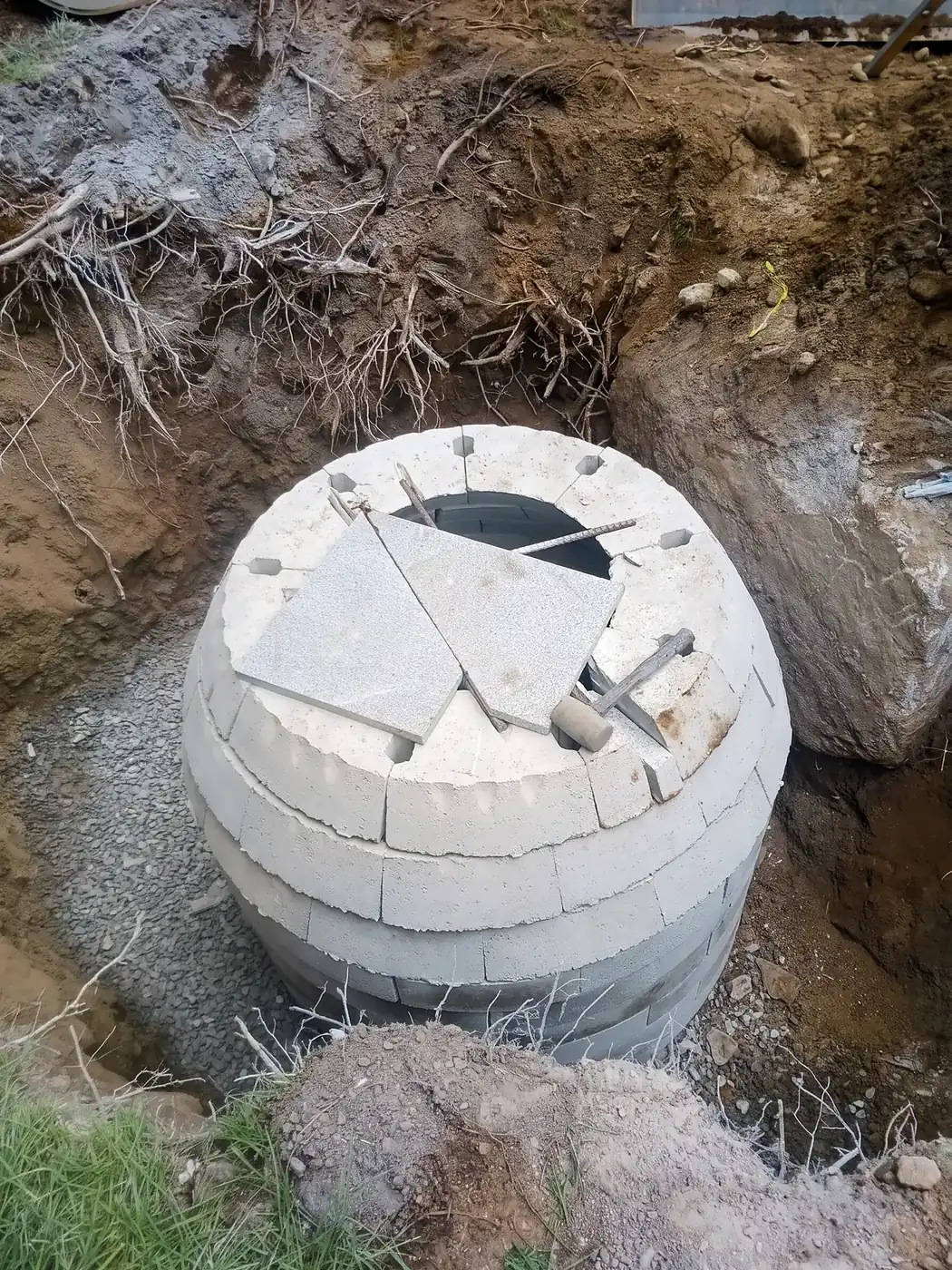
A dry well (poço de drenagem) collects roof or driveway water and lets it soak into the ground slowly. It works best where the soil drains and the water table is not too high, so on low wet lots it may not be the right tool. In some cases a rain garden or a stone infiltration trench is a better fit because it handles water closer to the surface. Every property is different, which is why we start with a site visit and test holes.
Conservation commission review, in plain terms
Massachusetts protects wetlands, ponds, rivers and streams under the Wetlands Protection Act, and each town has a Conservation Commission that reviews work near them. In general, digging, filling, grading or building within 100 feet of a wetland, or within 200 feet of most rivers and perennial streams, can require a filing with the commission before work starts. Towns can also have their own local bylaws with additional rules.
For homeowners, the practical takeaway is simple: if there is a pond, brook, swamp or wet area anywhere near your project, contact the Westborough Conservation Commission before you plan anything. They can tell you whether a filing is needed and what it involves. Starting that conversation early keeps the project on schedule.
Once you know what the town requires, we plan the work to fit those conditions, keep erosion control in place during construction and leave the site clean.
Planning a patio or walkway near water
A patio or walkway on a wet lot needs a deeper, well drained base so it does not heave in winter. Using clean crushed stone, adding a drain line at the low edge and pitching the surface away from the house all help.
Permeable pavers are worth considering near wetlands. They let water pass through the joints into a stone base below, which reduces runoff and can be easier to approve in sensitive areas. Natural bluestone or pavers on a standard base can also work well with the right drainage.
Keep in mind that the area closest to a wetland is often the most restricted. Placing the patio closer to the house, away from the resource area, can make both the review and the construction easier.
Best time for drainage and hardscape work in Westborough
Spring shows you where the water problems are, but it is often the hardest time to dig because the ground is saturated. Late summer and early fall are usually best for drainage and hardscape work near water, when the water table is lower and the soil is firm.
If a Conservation Commission filing is needed, factor in the time for review and plan ahead. Many homeowners walk the yard in spring, start the paperwork early in the season and build later in the summer or fall. Always call Dig Safe (811) before excavation.
Working with Machado Landscaping in Westborough
Machado Landscaping & Construction installs French drains, dry wells, patios, walkways and retaining walls for homeowners and for builders and general contractors in Westborough and across central Massachusetts. We have been in construction since 1998, and we are careful on sites near water, keeping the work area tidy and organized.
Call or text (508) 663-9401, Monday to Saturday from 8 AM to 6 PM. We reply within 1 hour during business hours, and the estimate is free with no visit fee.
Frequently asked questions
- Do I need conservation commission approval for drainage work in Westborough?
- If the work is near a wetland, pond, brook or river, it may need a filing with the Westborough Conservation Commission. Under state law, work within 100 feet of a wetland or 200 feet of most rivers and perennial streams is commonly reviewed. Contact the commission before planning the project.
- Will a dry well work on a wet lot near a pond?
- Not always. A dry well needs soil that can absorb water, and on lots with a high water table it may stay full. A French drain to a proper outlet, a rain garden or a shallow infiltration trench can be better choices. A site visit with test holes helps decide.
- Are permeable pavers a good option near wetlands?
- Often yes. Permeable pavers let water pass through into a stone base, which reduces runoff from the patio or driveway. They still need proper design and may still require conservation review depending on location.
- How much does a French drain cost in Westborough, MA?
- It depends on length, depth, soil, outlet and site access. As a rough market guide, residential French drains in Massachusetts often cost somewhere in the range of a few dozen dollars per linear foot installed, with more for deep trenches or difficult access. A free estimate gives you an accurate number.
Serving
Found this helpful? Make us a preferred source on Google.
Ready for an exact price?
Get a free, no-pressure in-home estimate. Real numbers for your home, not a phone guess.