
Yard Drainage and Dry Wells in Marlborough, MA: Ledge, Clay and What Actually Works
· By Sidney Mota Machado
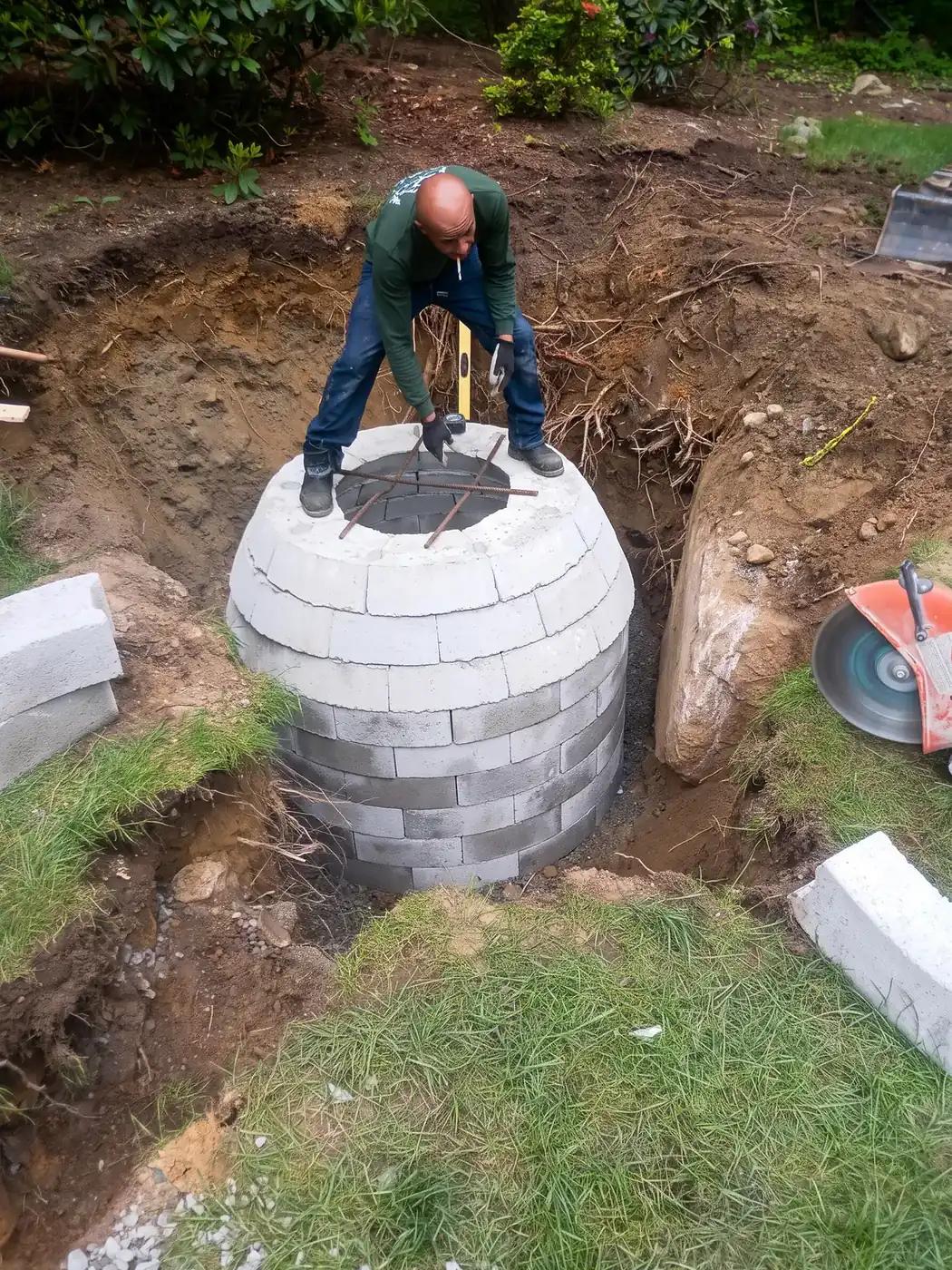
Marlborough is our home base, so drainage problems here are the ones we hear about most. Water that sits on the lawn for days after a storm, a soggy strip along the foundation, a downspout that dumps right next to the basement wall, or a driveway that turns into a creek every spring. From French Hill and Jericho Hill to the streets around Lake Williams and Fort Meadow Reservoir, the city has a lot of rolling ground, and water always finds the low spot.
This guide is about planning a drainage project in Marlborough the right way: understanding why your yard holds water, how shallow ledge and dense soil change the plan, when a dry well (poço de drenagem) makes sense and when it does not, and what to check with the city before anyone starts digging. It is written for homeowners, but builders finishing a new lot will find the same points useful.
Why so many Marlborough yards hold water
Like much of central Massachusetts, the ground around Marlborough was shaped by glaciers. On many lots that means a layer of topsoil over dense glacial till, sometimes with clay pockets, and in some neighborhoods bedrock (what New Englanders call ledge) sitting surprisingly close to the surface. None of these drain quickly. Rain soaks through the top few inches, hits the dense layer and then moves sideways, usually toward your foundation or the lowest corner of the yard.
Add the hills, older homes with downspouts that discharge at the base of the wall, and newer houses where the builder's backfill settled and now slopes the wrong way, and you get the classic Marlborough complaint: a wet basement in March and a lawn that squishes underfoot well into April.
The point is that drainage is a soil problem first. Before choosing a fix, it helps to know what is under your lawn. A good estimate starts by looking at where the water comes from, where it collects and how the ground behaves when you dig a test hole.
Dry well, French drain or regrading: how to choose
A dry well is an underground chamber, typically built from a stone base and stacked concrete rings or a perforated tank, that collects water from a downspout or drain line and lets it soak slowly into the surrounding soil. It works well when the soil around and below it can actually absorb water. In sandy or gravelly ground it can handle a lot of roof runoff.
A French drain is a trench with perforated pipe wrapped in stone that intercepts water moving across or through the ground and carries it somewhere else: to a dry well, to a safe outlet downhill, or to the street where that is allowed. It is the better tool when the problem is water flowing toward the house from higher ground.
Regrading means reshaping the soil so the ground slopes away from the foundation. Sometimes this is all a yard needs. Often the best result combines all three: regrade near the house, a French drain to catch what comes downhill, and a dry well or outlet to send it somewhere harmless.
What ledge and dense soil mean for a dry well
This is where Marlborough lots get tricky. A dry well sitting in dense till or a few feet above ledge has nowhere to send the water, so it fills up and stays full. Homeowners sometimes pay for a dry well that works for a season and then backs up the downspout every heavy rain.
The fix is not to skip dry wells, it is to size and place them for the soil you have. That can mean digging deeper to reach a better layer, using a wider stone envelope around the rings so there is more soil contact, using two smaller units instead of one, or moving the dry well to a part of the yard with better ground. When ledge is right there, a French drain to a surface outlet may be the smarter choice.
A simple test hole filled with water tells you a lot. If it is still full the next day, the plan has to account for it. That is the kind of check we do during a free estimate before recommending anything.
Best time of year to dig drainage in Marlborough
Spring is when most people notice drainage problems, and it is a great time to look at the yard because you can see exactly where water collects. Actual excavation, though, often goes best from late spring through fall, when the ground has dried out enough that heavy equipment does not tear up the lawn.
Late summer and early fall are a sweet spot for many projects. The soil is workable, there is time for grass to fill back in before winter, and the system is in place before the fall rains and the spring thaw. Work can happen in winter if the ground is not frozen, but frost and snow slow everything down.
If you are planning a patio, walkway or driveway project, plan the drainage at the same time. Burying a pipe before the pavers go down costs far less than lifting a finished patio later.
Permits and rules to check before digging
Drainage work touches a few different rules, and they depend on where your property sits. Before any digging, call Dig Safe (811) so underground utilities are marked. That one is required no matter what.
If your yard is near a pond, stream or wetland (and Marlborough has plenty, around Lake Williams, Fort Meadow Reservoir and the smaller brooks that feed them), the Marlborough Conservation Commission may need to review the work. Under the Massachusetts Wetlands Protection Act, activity within 100 feet of a wetland or 200 feet of most rivers and perennial streams can require a filing. It is also worth checking with the city about where you are allowed to discharge water, since sending runoff onto a neighbor's property or a public way can create problems.
We always recommend checking with the Marlborough building department and conservation office for your specific address. Rules change and every lot is different, so a quick call up front saves headaches later.
What to expect when you call us
Machado Landscaping & Construction is based in Marlborough, and drainage and dry wells are a regular part of our work, both for homeowners and for builders who need a lot to drain properly before handing over the keys. We have been in construction since 1998, and we keep job sites clean and organized from the first shovel to the final grade.
Call or text (508) 663-9401, Monday to Saturday from 8 AM to 6 PM, and we reply within 1 hour during business hours. The estimate is free, with no visit fee. We will walk the yard, look at where the water goes and give you a clear plan with a fair price.
Frequently asked questions
- How much does a dry well cost in Marlborough, MA?
- It depends on the size, depth, soil and how far the pipe has to run. As a rough guide, a single residential dry well connected to a downspout often falls in the low thousands of dollars, while yards with ledge, long pipe runs or multiple units cost more. A free on-site estimate is the only way to get a real number for your property.
- Will a dry well work if my yard has ledge or clay?
- Sometimes, but it has to be planned for that soil. In dense till or with ledge close to the surface, a dry well may need to go deeper, have a larger stone envelope or be split into smaller units. In some yards a French drain to a surface outlet is a better choice. A simple percolation test during the estimate helps decide.
- Do I need a permit for a French drain in Marlborough?
- Many small drainage projects do not need a building permit, but work near wetlands, ponds or streams may require review by the Marlborough Conservation Commission, and you must call Dig Safe (811) before digging. Check with the city for your specific address before starting.
- Can drainage be added under an existing patio or walkway?
- Yes, but it usually means lifting part of the surface, installing the pipe and stone, and resetting the pavers or stone. It is much cheaper to plan drainage before a new patio or walkway is built, which is why we look at drainage on every hardscape estimate.
Serving
Found this helpful? Make us a preferred source on Google.
Ready for an exact price?
Get a free, no-pressure in-home estimate. Real numbers for your home, not a phone guess.