Chimney Repair and Stone Steps for Older Worcester, MA Homes
· By Sidney Mota Machado
Worcester is often called the City of Seven Hills, and anyone who has climbed a street on Vernon Hill or Grafton Hill knows why. It is also a city of older housing: colonials, Victorians, capes and thousands of triple-deckers, many of them built a century ago. Old brick chimneys and steep front steps are part of that picture, and both take a beating from New England freeze and thaw cycles.
This guide covers the two masonry repairs Worcester homeowners ask about most: chimney repair and stone or brick steps. You will learn the warning signs, the difference between repointing and rebuilding, and how to plan steps on a sloped lot so they stay level. Machado Landscaping & Construction Inc is based in Marlborough and takes on masonry work in Worcester and across Central Massachusetts.
Why old chimneys in Worcester wear out
The part of a chimney above the roofline is fully exposed to rain, snow, wind and sun. Water soaks into old mortar and soft brick, freezes and expands. After enough winters, joints crumble, bricks spall (the face pops off) and the cap of mortar on top, called the crown, cracks open and lets even more water in.
Many older homes also have chimneys that are no longer used for a fireplace, so nobody looks at them until a leak shows up on a ceiling or a loose brick lands in the yard. On a triple-decker, the chimney can be tall and hard to see from the street, which makes damage easy to miss.
Signs worth calling about: mortar joints that are recessed or sandy, bricks that are cracked or flaking, white staining on the brick (efflorescence), a visible lean, rust or water stains near the chimney inside the house, and pieces of mortar on the roof or in the gutters.
Repointing, crown repair or rebuild?
Repointing means grinding out the failed mortar to a consistent depth and packing in new mortar. It is the right fix when the bricks themselves are still solid. On old brick, the mortar mix matters: a mortar that is harder than the brick can cause the brick to fail first, so the mix should match the age and type of the masonry.
Crown repair or replacement addresses the top slab. A cracked crown is one of the main ways water gets into a chimney, so fixing it early can prevent a much bigger job. The flue liner and the flashing where the chimney meets the roof are separate items; a roofer or chimney specialist may be needed for flashing or liner work.
A rebuild above the roofline is needed when bricks are badly spalled, the chimney leans or the masonry is loose. The chimney is taken down to sound brick and rebuilt with new brick and mortar and a new crown. It sounds dramatic, but on a badly deteriorated chimney it is often the only repair that lasts. Note that we do masonry chimney work only; we do not offer chimney sweeping.
Front steps on hilly Worcester lots
Because so many Worcester homes sit above or below the street, front steps tend to be long and steep. Old concrete or brick steps settle, crack and pull away from the house over time. Loose treads and a wobbly railing are not just ugly, they are a safety issue for anyone carrying groceries up in January.
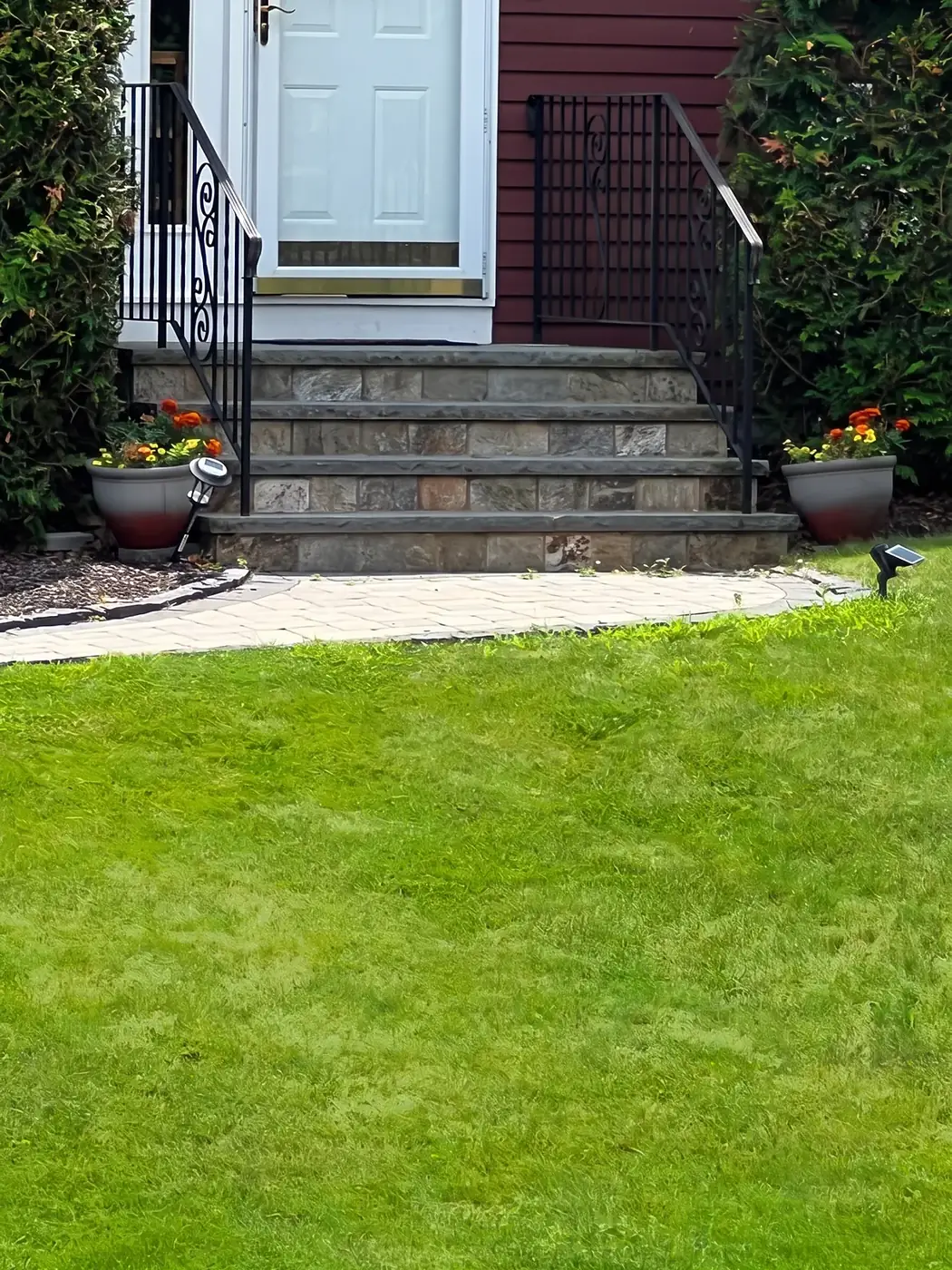
Good steps start below the surface. They need a solid footing or a compacted base that will not heave, consistent riser heights so nobody trips, and treads deep enough for a full foot. Rebuilding steps in stone, such as bluestone treads with fieldstone or block risers, can match the character of an older house and hold up well to winter.
On a triple-decker, the steps often serve several households and see heavy daily use. Planning wider treads, a landing at the top and a path that sheds water away from the entry makes a big difference in how the steps age.
Retaining walls and slopes
Hilly lots usually come with retaining walls, many of them old fieldstone or concrete walls that are bulging or leaning. A failing wall next to the steps or the driveway is often the real reason the steps are cracking, so it pays to look at both together.
A new block or stone retaining wall needs a proper base, drainage stone and a way for water to exit behind it. Without drainage, water pressure pushes on the wall every spring. Taller walls can require engineering and a permit, so the design should be checked with the City of Worcester before work begins.
What drives the cost
Chimney repointing, crown repair and rebuilds vary a lot in price. Height above the roof, roof pitch, access for staging or ladders, the number of flues and how far down the damage goes all affect the number. Across New England, a small repointing job can be a few hundred to a couple thousand dollars, while a full rebuild above the roofline often runs into several thousand. These are typical market ranges only.
Steps depend on the number of risers, the material, whether a footing is needed and whether the old steps have to be broken out and hauled away. The honest answer is that your estimate depends on what we find on site. Machado Landscaping offers free estimates with no visit fee and replies within 1 hour during business hours.
Best time to schedule masonry work
Mortar needs to cure above freezing, so most exterior masonry in Central Massachusetts is done from spring through fall. If you notice a chimney problem in winter, it is still worth getting it looked at, so the repair is planned and on the calendar for the first stretch of good weather.
Fall is a good time to fix steps before ice season and to check the chimney crown before snow sits on it for months.
Frequently asked questions
- How do I know if my chimney needs repointing or a rebuild?
- If the bricks are solid and only the mortar is crumbling, repointing is usually enough. If bricks are spalling, loose or the chimney leans, a partial or full rebuild above the roofline is often needed. An on site inspection is the only way to know.
- Can a leaking ceiling be caused by the chimney?
- Yes. A cracked crown, failed mortar joints or bad flashing can all let water in near the chimney. Masonry issues are handled by a mason, while flashing is often a roofing item, so the source should be identified first.
- Do I need a permit to rebuild front steps in Worcester?
- It depends on the scope. Like-for-like repairs are treated differently from new or larger steps and structural work. Check with the City of Worcester building division before work begins.
- Do you sweep chimneys or install chimney caps?
- No. We do masonry work on chimneys, such as repointing, crown repair and rebuilds. For sweeping or caps, a chimney service company is the right call.
Related services
Serving
Found this helpful? Make us a preferred source on Google.
Ready for an exact price?
Get a free, no-pressure in-home estimate. Real numbers for your home, not a phone guess.